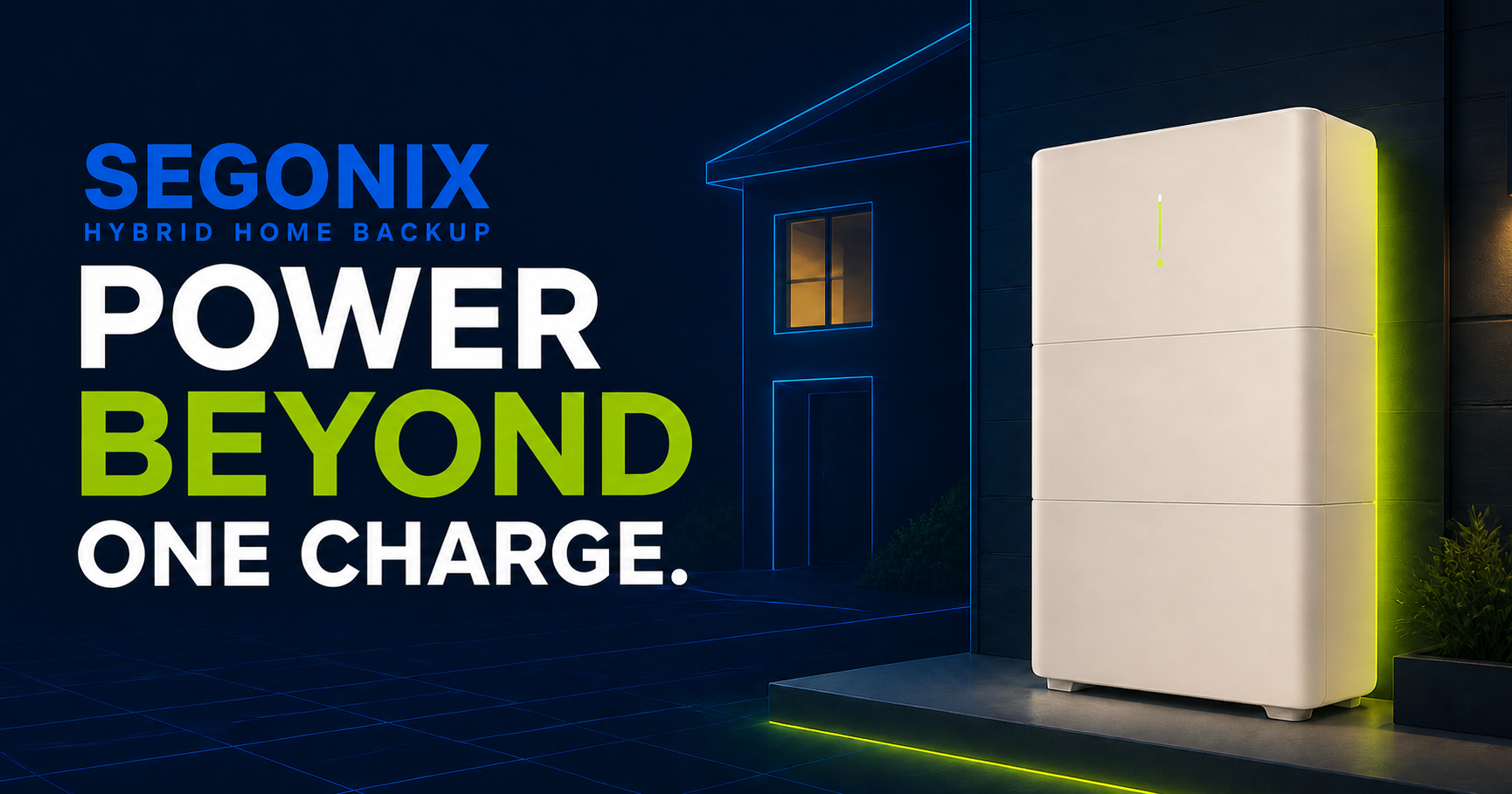
Coming soon · Home battery power on your terms

Power, heldin reserve.

SEG Energy & Power is developing a home battery offering that helps eligible households store lower-cost grid energy, use it when rates rise, and prepare selected loads for an outage. During qualifying extended outages, planned recharge support is designed to replenish the battery and return the home to quiet battery power.

01 / FLEXIBLE STORAGEThree planned battery sizes

Approximate 20, 40, and 60 kWh targets for different home-energy priorities.

02 / RATE-AWARE USECharge low. Use at peak.

Designed around eligible time-of-use rates and the home’s configured settings.

03 / INFINITE BATTERYRecharge support for extended outages

Planned generator-based recharge support can replenish the battery and return the home to quiet battery power.

01 / ABOUT SEGHOME ENERGY · MADE CLEARER

A new choice in home energy

Stored energy, shaped around the home.

SEG Energy & Power is the customer-facing energy company, developing a soon-to-launch home battery offering for households that want more control over when and how they use stored energy. KPE Installation provides field installation and service. The SEG concept grows from roughly 25 years of firsthand generator-customer experience.

OUR MISSION

Make stored energy simpler, more useful, and easier to live with.

SEG is being built to make home energy storage easier to understand—from finding the right configuration through installation and everyday use. The goal is to help eligible households charge during lower-price grid hours, use stored energy during expensive peak periods, and keep a selected reserve for configured loads when the grid goes down.

UP TO 50% LOWER ELECTRICITY COSTS.
02 / HOW SEG WORKSCHARGE LOW · STAY READY · USE AT PEAK

Store lower-cost power. Use it when prices rise.

On eligible time-of-use plans, SEG is designed to move electricity purchases away from the grid’s most expensive hours. The utility rate, system settings, household use, and selected reserve determine how it operates.

01

OFF-PEAK CHARGING

Charge when grid power costs less.

On eligible time-of-use plans, SEG is designed to charge during lower-price hours based on the utility rate and system settings.

02

READY AT HOME

Keep energy in reserve.

Stored energy can support everyday use while maintaining a selected reserve for configured loads during qualifying outages.

03

PEAK-TIME USE

Use stored power when rates rise.

During expensive peak hours, the home can draw from the battery instead of purchasing as much electricity from the grid.

INSTALLATION PREVIEWWHITE PRIMARY · BLACK AVAILABLE

Designed to look at home outside.

Warm white is the primary planned battery finish, with satin black as an option. Exterior conduit can be color-matched to the home or its gutters and downspouts when the agreed installation scope allows. Final equipment, finish, location, clearances, and site work are confirmed for each property.

03 / BATTERY PLANSCURRENT BATTERY AGREEMENT PRICING

Simple monthly battery agreements

Start small. Build more reserve.

Current SEG pricing includes three planned battery sizes and a generator-support option for each. Every complete stack contains three tightly mated 6.65 kWh modules, totaling 19.95 kWh per stack. Final system configuration and battery agreement terms are confirmed for each home before signing.

SEG 20

Approx. 20 kWh target

1 stack / 3 modules

$29/ month

Essential-load option

WITH GENERATOR SUPPORT$69/mo
  • Entry-level battery agreement
  • Designed for critical-load configurations
  • Smaller planned equipment footprint
60-month prepaid option$1,45050 monthly payments within one 60-month battery agreement
SEG 40

Approx. 40 kWh target

2 stacks / 6 modules

$39/ month

Constrained-site option

WITH GENERATOR SUPPORT$79/mo
  • Expanded stored-energy target
  • Planned for tighter indoor or utility spaces
  • Balanced capacity and placement flexibility
60-month prepaid option$1,95050 monthly payments within one 60-month battery agreement
COMPANY-OWNED EQUIPMENTONE 60-MONTH AGREEMENT BLOCKNO AUTOMATIC RENEWALNO PER-EVENT GENERATOR FEE
04 / GENERATOR SUPPORTONE HOME-ENERGY PLAN

Battery reserve,generator support.

SEG’s current plans include generator-support options across SEG 20, SEG 40, and SEG 60. Each proposed configuration is shaped around the home, with selected loads, equipment, electrical needs, installation scope, activation, and site work reviewed before signing.

01

RIGHT-SIZED PLANNING

Start with the loads that matter.

The proposed battery option and generator-support scope are shaped around the selected loads the home is intended to support.

02

CLEAR INCLUSIONS

Know what is in the agreement.

Before signing, the planned equipment and services are identified along with any property-specific electrical upgrades, permits, taxes, or extraordinary site work.

03

CONFIGURED FOR THE HOME

Bring storage and support together.

Placement, finish, clearances, equipment, controls, reserve settings, generator compatibility, and activation needs are confirmed for each property.

05 / SEG RECHARGE SERVICETHE DIFFERENCE THAT KEEPS THE CYCLE MOVING

Beyond one stored charge

Infinite Battery

A conventional battery has one stored charge. During a qualifying extended outage, SEG's planned Recharge Service is designed to bring generator-based recharge support so the battery can be replenished and the home can return to quiet battery power.

No per-event generator fee.

  1. 01 / CONVENTIONAL BATTERYUse the charge stored at home.
  2. 02 / QUALIFYING EXTENDED OUTAGESEG brings planned generator-based recharge support.
  3. 03 / BATTERY REPLENISHEDReturn the home to quiet battery power.

“Infinite” does not mean unlimited instantaneous output or unconditional uninterrupted service. Capability depends on loads, access, battery state, weather, availability, and final agreement and service terms.

06 / EVERYDAY USEONE HOME · CHANGING NEEDS

Energy should move at your pace.

A home battery can charge when grid energy is less expensive, hold a selected reserve, and support configured loads as rates and household needs change. The final SEG experience depends on the utility rate, home, equipment, and system settings.

EXAMPLE TIME-OF-USE SCHEDULEUTILITY HOURS VARY
GRID / LOWER-RATE PERIODSEG charges

Grid energy is stored when the eligible rate plan and system settings call for it.

SEG BATTERYEnergy held in reserve

The battery keeps energy available for configured household use and reserve settings.

HOME / HIGHER-RATE PERIODStored energy powers the home and reduces grid purchases

Configured home loads draw from energy held in the SEG battery.

Charging Stored reserve Battery use

Charge when rates are lower. Use stored energy when rates rise.

Timing and savings vary by utility plan, household use, and system settings.
07 / CUSTOMER JOURNEYFROM HOME REVIEW TO CONFIGURATION

From first conversation to a ready home.

Once the official interest channel opens, this is the path from reviewing the home through installation and configuration.

  1. 01

    Start with the home.

    Review household energy use, selected-load priorities, the electrical setup, and interest in generator support.

  2. 02

    Shape the proposed system.

    Review SEG 20, SEG 40, or SEG 60, including planned capacity, equipment, placement, finish, settings, and generator-support pairing.

  3. 03

    Confirm scope and terms.

    Before signing, confirm pricing, included equipment and services, agreement terms, property-specific electrical upgrades, permits, taxes, and extraordinary site work.

  4. 04

    Install and configure.

    Installation and activation follow the agreed scope, then selected loads and reserve settings are configured for the home.

08 / QUESTIONSPLAIN ANSWERS · ORIGINAL SEG WORDING

Understand the plan before you sign.

Detailed answers about the planned offering, installation, outages, generator delivery, ownership, data, and the documents that still must be finalized before launch.

01 / THE OFFERING

Plans, pricing, and what SEG is building

What is SEG Energy & Power?

SEG Energy & Power is developing a soon-to-launch home battery offering for households that want more control over when and how they use stored energy. The planned lineup includes approximate 20, 40, and 60 kWh storage targets, with generator-support options available.

Does SEG replace my electric utility or retail electricity provider?

Not under the current battery concept. The battery offering is separate from the company that sells and delivers electricity to the home. A customer keeps the utility or retail electricity provider available in the service area unless a future written offer expressly says otherwise.

What are the current battery agreement prices?

Current monthly pricing is $29 for SEG 20, $39 for SEG 40, and $49 for SEG 60. Plans with generator support are $69, $79, and $89 per month. Prepaid options are $1,450, $1,950, and $2,450 for the same 60-month period. Monthly plans use 50 monthly payments within one 60-month battery agreement.

How does the battery agreement work?

Each battery agreement is one 60-month block with no automatic renewal. The battery equipment remains company-owned. The signed agreement will identify the equipment, included services, payment schedule, access rights, customer responsibilities, service limits, and end-of-term choices.

What is the 2026 installation price?

The one-time installation price for 2026 is $995. Property-specific electrical upgrades, permits, taxes, and extraordinary site work may be separate and must be disclosed before that added work is approved.

What will be included in my final proposal?

The proposal should identify the battery configuration, selected loads, planned placement and finish, electrical work, controls, reserve settings, generator-support scope, installation price, known exclusions, and any property-specific upgrades, permits, taxes, or extraordinary site work.

When can I register interest or contact SEG?

Launch timing, service areas, and the official interest and contact channels are still being finalized. They will be added to this site when confirmed; SEG is not collecting contact details through this page today.

02 / THE HOME

Eligibility, installation, and compatibility

How will SEG determine whether my home qualifies?

A home review is expected to consider electrical service, panel and transfer equipment, available placement, clearances, selected loads, household energy use, communications, utility and permitting rules, safe service access, and generator-support needs. A home is not accepted until the site and scope are approved.

Does SEG provide whole-home backup?

The current offering is planned around configured loads, not an unconditional promise to operate every appliance at the same time. The signed design will identify supported circuits or load limits. High-demand equipment may need to be turned off or managed during an outage.

Do I need solar panels?

Not necessarily. SEG is being designed to charge from the grid on eligible rate plans. Solar compatibility depends on the final equipment, utility rules, existing solar design, and site configuration. Solar production and savings are not promised unless they are specifically included in writing.

Can the batteries be installed outside, and which finishes are planned?

Outdoor placement may be possible when the final equipment and property meet the required conditions. Warm white is the planned primary finish, with satin black as an option. Placement, finish availability, clearances, drainage, protection, and site work are confirmed for each home.

Who handles permits, utility approval, and interconnection paperwork?

The final installation scope must state who prepares and pays for each permit, inspection, utility application, tariff document, and interconnection agreement. Required utility or authority approvals can delay activation and cannot be waived by SEG. Non-exempt electrical work must be performed through properly licensed Texas electrical contractors and electricians and follow applicable electrical-code requirements.

How long will installation take?

Timing depends on the home review, equipment availability, permits, utility approvals, weather, electrical upgrades, and inspection schedules. A projected date is an estimate until the required approvals and site conditions are confirmed.

What if the installer finds additional work?

Work outside the signed scope should be documented before it proceeds. A written change should describe the reason, price, schedule effect, and whether the change is required for code, safety, utility approval, or the customer’s requested design.

03 / BATTERY USE

Everyday operation and outages

How could SEG lower my electricity costs?

On eligible time-of-use plans, SEG may charge during lower-price periods and support configured home loads when prices rise. Results depend on the utility rate, household use, system size, settings, battery availability, and future rate changes. Savings are estimates, not guarantees.

Who controls when the battery charges and discharges?

The final equipment and agreement will define automatic operating schedules, customer controls, reserve settings, remote support, and any circumstances in which SEG may change settings. The current concept is rate-aware storage for the home; it is not a separate retail electricity plan.

Can SEG provide power during an outage?

A properly installed and configured battery system may support selected household loads during a qualifying outage. Backup capability and duration depend on the final equipment, charge level, system configuration, selected loads, temperature, battery condition, and household energy use.

How long will the battery last during an outage?

There is no single duration for every home. Stored energy is used faster by air conditioning, electric heat, water heating, cooking, laundry, pumps, vehicle charging, and other large loads. Reducing demand generally extends backup time. Any runtime example is an estimate, not a promise.

What happens if the home is using more power than the system can supply?

The system may shed configured loads, decline to start, shut down, or require the customer to reduce demand before backup can resume. The final design should identify important power limits and any automatic or manual load-management steps.

Can I rely on SEG for medical or life-safety equipment?

No battery, utility, network, or generator-delivery service should be treated as guaranteed power for life-critical equipment. Customers who depend on powered medical devices or other life-safety systems need an independent emergency plan recommended by the device provider and qualified professionals.

Who owns, monitors, and services the battery?

The battery equipment remains company-owned during the agreement. The final agreement must define monitoring, maintenance, repair, replacement, customer access, warranty handling, and costs for damage caused by misuse, unauthorized work, negligence, or intentional acts.

04 / INFINITE BATTERY

Generator delivery and recharge support

What does Infinite Battery mean?

A conventional battery has one stored charge. Infinite Battery describes SEG’s planned ability to replenish the battery through generator-based recharge support during a qualifying extended outage, then return the home to quiet battery power. It does not mean unlimited output, endless fuel, or unconditional uninterrupted service.

How is generator support expected to work?

For an enrolled and compatible home, SEG’s planned Recharge Service would dispatch generator-based support during a qualifying extended outage, connect it through the approved equipment, replenish the battery, and remove or disconnect the support as the service plan requires. Exact dispatch and operating procedures belong in the Generator Delivery & Recharge Service Addendum.

Is generator delivery guaranteed during every outage?

No. Dispatch can depend on outage qualification, enrollment, service-area coverage, safe road and property access, weather, flooding, emergency restrictions, equipment and fuel availability, crew capacity, communications, battery condition, and other conditions beyond reasonable control. The final agreement must explain priority, response targets, and service limits.

What does ‘no per-event generator fee’ include?

The current plan concept has no per-event generator fee. Before launch, the signed service addendum must state exactly what delivery, connection, operation, fuel, wait time, repeat visits, removal, taxes, and extraordinary conditions are included so customers are not asked to rely on an undefined promise.

What must the customer do before a generator-support visit?

The customer must provide lawful and reasonably safe access, disclose gates, pets, flooding, damaged equipment, medical or fire hazards, and keep the approved operating area clear. A crew may pause or refuse service when the route, property, equipment, weather, or conduct at the site is unsafe.

Where may a portable generator operate safely?

A portable generator must never operate inside a home, garage, shed, or other enclosed space. Texas and federal safety guidance says it should operate outdoors at least 20 feet from the home, doors, windows, and vents, with exhaust directed away. Manufacturer instructions, carbon-monoxide alarms, electrical codes, and crew safety rules also apply.

Who may connect, fuel, operate, and disconnect delivered equipment?

Only the people and procedures authorized by the final service addendum may handle delivered generators, fuel, cords, inlets, or recharge equipment. Customers may not relocate, modify, bypass, backfeed, refuel while hot, or connect unapproved equipment. Utility restoration does not automatically make a running generator safe to approach.

What if recharge support cannot be delivered or completed?

SEG may delay, reroute, suspend, or cancel a visit when service cannot be performed lawfully and safely. The agreement must explain notice, rescheduling, any refund or credit that applies, and circumstances that do not create liability for lost power, food, comfort, business activity, medical needs, or other consequential losses.

Can I use my own generator or third-party equipment?

Only equipment confirmed as compatible with the installed system and allowed by the signed scope may be connected. Generator manufacturers remain responsible for their own products and warranties. Damage or hazards caused by unapproved, defective, poorly maintained, or improperly operated third-party equipment may be excluded from SEG service and warranty coverage.

05 / AGREEMENTS

Ownership, changes, data, and customer responsibilities

Which documents should I receive before signing?

The planned document set includes a Battery Services Agreement, installation scope, pricing and payment schedule, change-order process, Generator Delivery & Recharge Service Addendum when selected, safety rules, privacy and system-data notice, and move, transfer, removal, and cancellation terms. The customer should be able to keep a completed copy of every signed document.

What happens if I sell the home or move?

The final agreement must state whether the agreement may transfer to a qualified buyer, whether equipment may remain temporarily, and what inspection, consent, removal, restoration, notice, and fees apply. No transfer should be assumed until SEG approves it in writing.

What happens if I cancel?

Cancellation rights, notice, any cooling-off period required by law, unpaid amounts, deinstallation, equipment removal, restoration, and any permitted fees must be stated in the signed agreement. The website does not create or replace those rights.

May SEG enter the property to inspect or service equipment?

The final agreement should provide reasonable access rights for scheduled installation, inspection, maintenance, emergency safety work, generator support, repair, replacement, and removal. Except for an emergency or another legally permitted circumstance, the agreement should describe notice and scheduling expectations.

What system and household data may be collected?

A connected battery may generate equipment status, charge, power-flow, fault, outage, performance, network, and service records. A privacy and system-data notice must explain what is collected, why it is used, who receives it, how long it is retained, how it is protected, and which customer choices or legal rights apply.

What warranties or repairs are included?

Included maintenance, manufacturer warranties, installer workmanship coverage, response process, exclusions, and replacement decisions must be identified in the signed agreement. Website descriptions are not a warranty and do not expand the written equipment or service warranty.

What controls if the website and signed agreement are different?

The final signed customer agreement, approved installation scope, written change orders, and applicable law control. This website explains the planned offering and may change before launch; it is not an offer, utility tariff, electricity facts label, warranty, or substitute for legal and safety advice.

09 / AGREEMENTS & DISCLOSURESDRAFT THE DETAILS BEFORE LAUNCH

A complete customer document set

Every promise needs a place in writing.

These are the documents the planned program needs. They are an agreement map—not final contracts. Final language should match actual operations, insurance, licensing, equipment, and Texas law, then receive attorney review before customers sign.

01

Battery Services Agreement

Ownership, 60-month term, payment schedule, maintenance, access, operating rights, service limits, damage, default, and end-of-term choices.

02

Installation Scope & Change Orders

Equipment, placement, selected loads, electrical work, permits, utility documents, inspection, site restoration, exclusions, and added work.

03

Generator Delivery & Recharge Addendum

Outage qualification, dispatch, priority, access, safe placement, fuel, operation, removal, delays, cancellations, and no-per-event-fee inclusions.

04

Safety & Operating Rules

Load limits, emergency procedures, prohibited work, generator and carbon-monoxide safety, customer duties, and reporting damaged equipment.

05

Privacy & System Data Notice

Battery telemetry, outage and service records, communications, security, retention, vendors, required disclosures, and customer privacy rights.

06

Move, Transfer, Removal & Cancellation

Notice, buyer qualification, transfer approval, deinstallation, restoration, unpaid amounts, permitted fees, and any cancellation rights required by law.

Current program disclosures

  1. 01

    SEG’s current battery concept is separate from the customer’s electric utility or retail electricity provider.

  2. 02

    Website descriptions, estimated savings, runtime examples, response targets, and launch plans are not promises or warranties.

  3. 03

    Backup power and generator delivery are not guaranteed and must not be the sole emergency plan for life-critical equipment.

  4. 04

    Generator support is conditioned on safe outdoor placement, lawful access, compatible equipment, weather, roads, fuel, crews, and the signed addendum.

  5. 05

    Utility approvals, permits, inspections, interconnection documents, and applicable electrical and fire-safety requirements may apply.

  6. 06

    A Texas attorney and qualified insurance, electrical, tax, and safety professionals should review final customer documents before launch.

Portable-generator safety is not fine print: never operate one in a home, garage, shed, or enclosed space. Keep it outdoors at least 20 feet from the home, doors, windows, and vents, with exhaust directed away, and follow the manufacturer’s instructions.

Texas backup-system rules ↗Texas generator safety guidance ↗U.S. carbon-monoxide guidance ↗

SEG Energy · Launch interest

Want SEG at your home?

SEG is preparing its first service areas. Official interest and contact channels are not live yet; they will be published here when confirmed. Until then, explore the plans or share the launch.

View battery plans Interest list opening soon